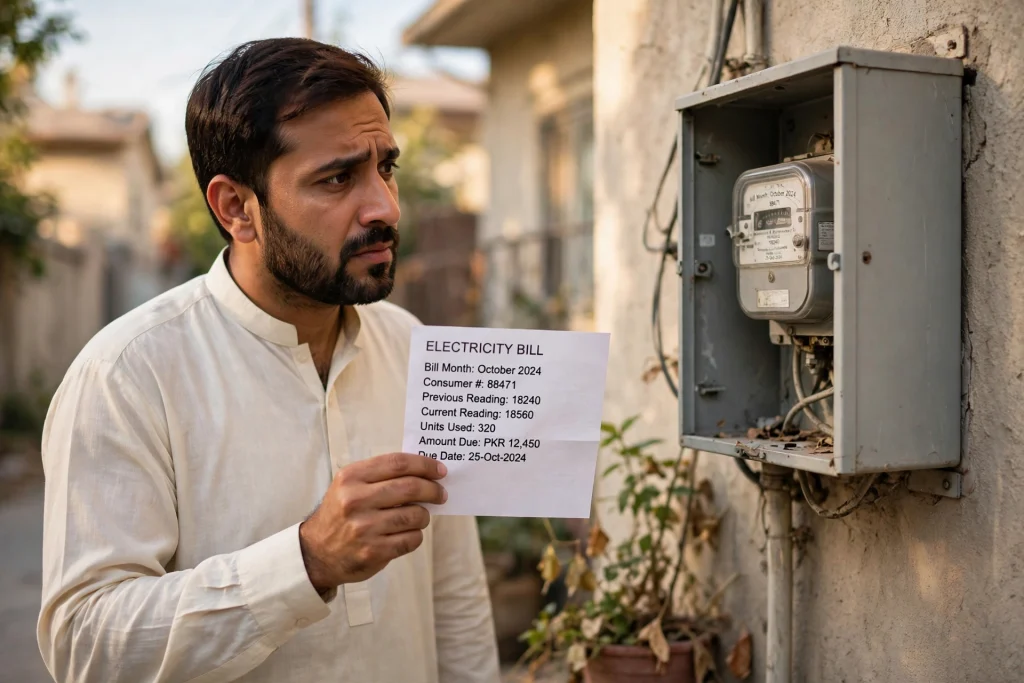
A bill that is suddenly double last month’s — with no new appliance and no change in routine — is not always a mystery. Sometimes it is genuinely higher use. Sometimes it is overbilling: a wrong reading, an estimated reading, a slab error, or a charge that should never have been there. The fix is completely different in each case, so the first job is telling them apart.
Short answer: A MEPCO overbilling complaint starts with proof, not anger. Compare the meter reading printed on the bill with the reading on your meter, check whether the bill is marked estimated (EST), and compare the units with your last few months. If the numbers do not match, complain on CCMS with photos of the meter and the bill, track it, and escalate to the SDO, then XEN, if it stalls. When the reading itself is wrong, a corrected or adjusted bill is the usual outcome.
First, Rule Out Genuine High Use
Before calling a bill wrong, check the honest explanations — a complaint built on a misunderstanding goes nowhere. Our guide to why your MEPCO bill may be high covers these in detail, but the quick checks are: did the household cross 200 units this month? That single crossing flips a protected consumer to unprotected rates and can nearly double the energy charge — see our protected vs unprotected guide for the worked 195 vs 205 unit comparison. Was there a wedding, guests staying over, or a heatwave month of all-night air conditioning? Is the FPA line unusually large? Our FPA explainer shows how to check that line with one multiplication.
If none of that explains the jump, you probably have a genuine overbilling case. Now prove it.
Step 1: Compare the Bill Reading With Your Meter
This is the single most important check, and it takes two minutes. Pull up your bill through the homepage checker at mepcobillinfo.online if you do not have the paper copy to hand.
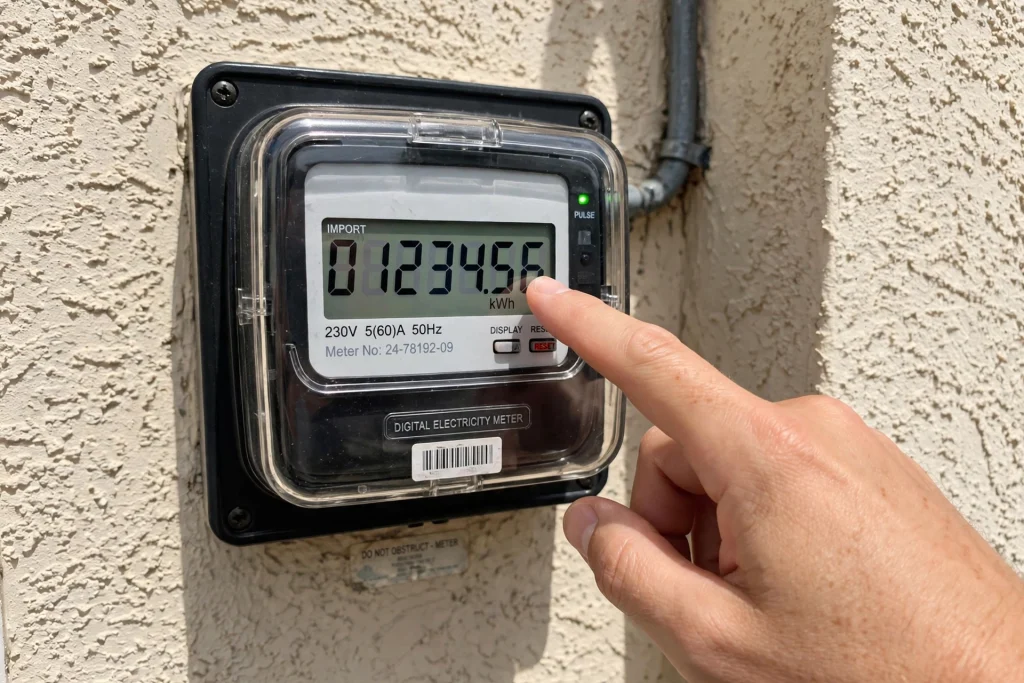
Find the “present reading” on your bill, then read the number your meter shows right now. The meter reading should be equal to or higher than the bill’s present reading — a meter only moves forward. If the bill’s present reading is already higher than what the meter shows today, the bill charged you for units you have not used yet. That is overbilling, plain and simple.
Take a clear photo of the meter showing the reading and the meter number, before anything else — a photo taken the day you spotted the problem is far stronger evidence than one taken a week later.
Step 2: Check for EST, Wrong Slab, and Wrong Charges
With the bill in hand, run down this short checklist:
- EST or estimated reading. If the bill is marked EST, no actual reading was taken and MEPCO billed an estimate, often from past average use. Estimates overshoot regularly, especially after a low-use month — and an EST bill is the easiest case to correct, because the fix is simply a real reading.
- Slab or category error. A domestic consumer billed at commercial rates, or a protected consumer billed as unprotected despite staying under 200 units, will see a sharply inflated total. Compare the tariff category on the bill with your actual connection type.
- Charges you do not recognise. An old arrears line, a detection bill, or an adjustment carried forward can inflate a bill with no change in use. Each such line should have a reason you can trace; an unexplained line is worth querying on its own.
- Units vs your own record. Note your meter reading on the same date each month, even just in a phone note. A few months of your own readings turn “my bill feels high” into “my average is 180 units and this bill claims 340” — and that sentence gets results.
A Worked Example: What Overbilling Looks Like on Paper
The numbers below are illustrative, not anyone’s real bill — but they show the pattern to look for:
| Last month | This month | |
|---|---|---|
| Present reading on bill | 12,450 | 12,790 |
| Units billed | 190 | 340 |
| Meter reading today | — | 12,610 |
Here the bill claims 340 units, yet the meter today still shows fewer units than the bill’s present reading. About 160 units were charged early or wrongly — a mismatch a subdivision office can act on immediately, because the meter itself contradicts the bill.
You can sanity-check the money side with our MEPCO bill calculator and the tariff rates guide: enter the units the meter actually supports and see what the bill should roughly have been. The gap is the amount in dispute.
Step 3: Gather Your Proof Pack, Then File on CCMS
Complaints with evidence move; without it, they circle. Before filing, collect: a photo of your meter reading showing the meter number; a photo or PDF of the disputed bill, plus the previous two or three bills; your own reading notes, if any; your 14-digit reference number; and any earlier complaint numbers. Keep copies of everything you submit.
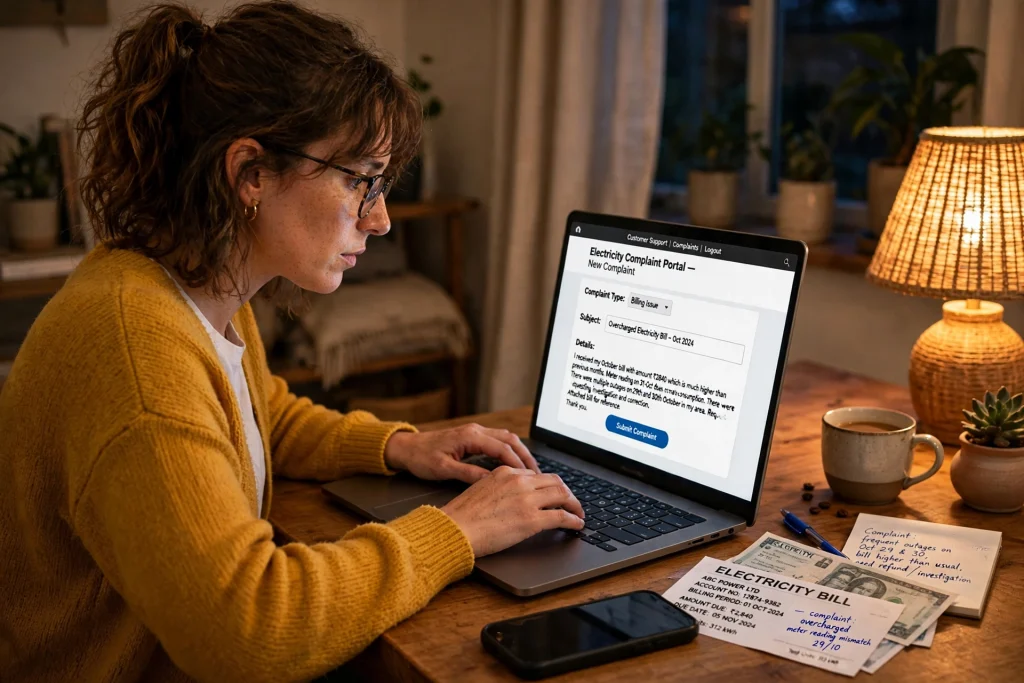
Then file online. Our step-by-step CCMS registration guide walks through the form; the overbilling-specific points are: choose the matching category — overbilling or wrong reading, not a general complaint; state the mismatch in numbers (“Bill present reading 12,790; meter reading on [date] 12,610; 160 units overbilled”); and attach the meter photo and the bill. Save the complaint number immediately.
You can also call the MEPCO helpline on 118 for guidance, but a phone call is no substitute for a written CCMS complaint with a tracking number.
Step 4: Track It, Then Escalate in Order
File and forget is how complaints die. Our CCMS complaint tracking guide shows how to follow the status online.
If the complaint stalls or is closed without a correction, escalate in this order, carrying the same complaint number and proof pack each time:
- Your subdivision office — the SDO. Ask for a meter re-reading or a checking visit. This step resolves most genuine reading errors, because a visit to your meter settles the question on the spot.
- The divisional office — the XEN. If the subdivision does not act, take the complaint number and the SDO visit record (or lack of one) there.
- The circle office — the SE, then NEPRA. For a complaint that has genuinely been through the lower offices without resolution, the circle office and ultimately NEPRA’s complaint mechanism are next. Show the chain: CCMS number, dates, and what each office did or did not do.
What a Correction Looks Like — and What to Avoid
When a reading error is confirmed, MEPCO typically corrects it with a revised bill for the same month, or a credit for the overbilled units applied to your next bill. Check the following bill line by line to confirm the credit actually appeared; corrections sometimes get approved but never applied.
Two mistakes weaken good cases. First, paying nothing and saying nothing: an unpaid disputed bill still accrues arrears and can lead to disconnection while the complaint is pending. If you can, pay the amount you accept as correct and dispute the rest in writing. Second, waiting months: the sooner the meter is photographed and the complaint filed, the stronger the proof. And never file the same complaint twice — duplicates split the trail. File once, track it, escalate it.
Frequently Asked Questions
How do I file a MEPCO overbilling complaint?
Register it on CCMS with your reference number, the exact reading mismatch in numbers, and photos of your meter and bill. Save the complaint number, track it online, and escalate to the SDO and then the XEN if it stalls.
What proof do I need for a MEPCO bill correction?
A photo of your current meter reading showing the meter number, the disputed bill, and ideally the previous two or three bills. Your own monthly reading notes strengthen the case further.
My bill says EST. Is that overbilling?
Not automatically, but an estimated reading often overshoots real use. Request a real reading through CCMS; once the actual reading is recorded, the excess is normally adjusted in a revised or later bill.
Should I pay an overbilled MEPCO bill?
If possible, pay the portion you accept as correct and dispute the remainder in writing through CCMS, stating this clearly in the complaint. Paying nothing risks arrears and disconnection while the dispute is pending.
Can I get my MEPCO meter checked or replaced?
Yes. If readings keep going wrong, ask the subdivision office for a meter check; a genuinely faulty meter follows the testing and replacement process, covered in our upcoming faulty-meter guide.
خلاصہ
اگر آپ کا میپکو بل اچانک بہت زیادہ آ گیا ہے تو پہلے بل پر درج ریڈنگ کا اپنے میٹر سے موازنہ کریں اور دیکھیں کہ بل EST (تخمینی) تو نہیں۔ اگر ریڈنگ میں فرق ہے تو میٹر کی تصویر اور بل کی کاپی کے ساتھ CCMS پر شکایت درج کروائیں، شکایت نمبر محفوظ رکھیں، اور اگر کام نہ ہو تو سب ڈویژن آفس (SDO) اور پھر XEN تک معاملہ لے جائیں۔ درست ریڈنگ ثابت ہو جائے تو اضافی یونٹوں کی رقم اگلے بل میں ایڈجسٹ ہو جاتی ہے، اس لیے ثبوت کے بغیر شکایت نہ کریں اور بل کی آخری تاریخ گزرنے سے پہلے کارروائی کریں۔