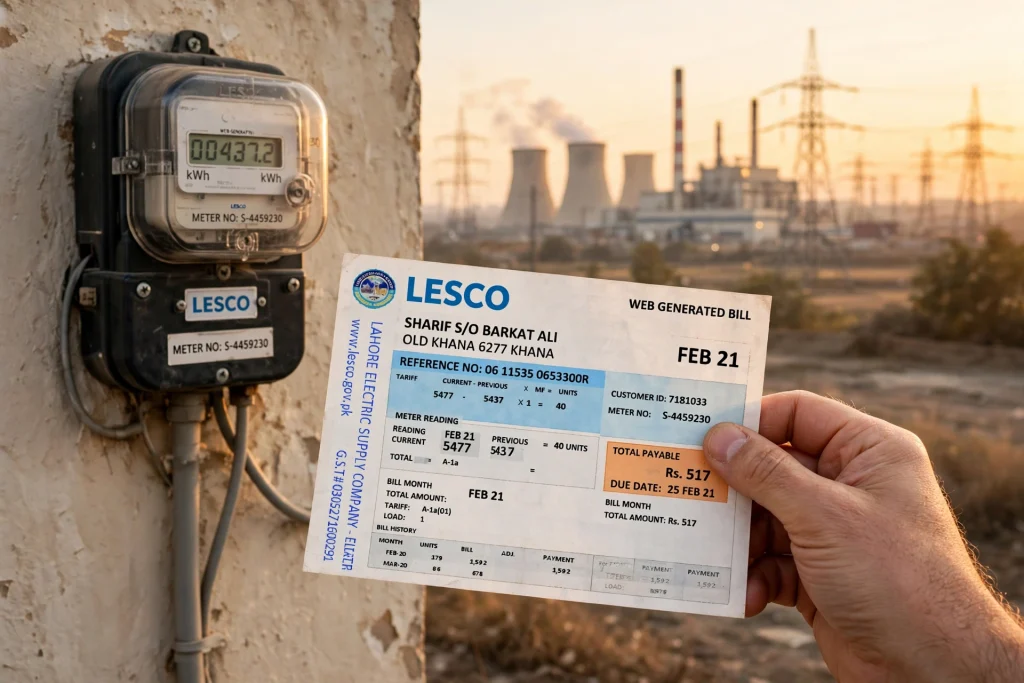
Open a MEPCO bill and, below the energy charges, you will usually find a short line marked FPA. Some months it adds a few hundred rupees; other months it is small, and occasionally it can even reduce the bill.
Short answer: FPA stands for Fuel Price Adjustment. It is a per-unit adjustment reflecting the difference between the fuel cost assumed in the base tariff and the actual fuel cost of generating the electricity you used. NEPRA determines the adjustment, MEPCO applies it through your bill, and the amount changes monthly because fuel prices do not stay still.
What FPA Actually Is
Think of your bill in two parts. The first part is the energy charge: your units multiplied by your slab rate, which is set in the tariff and does not move every month.
The second part is the correction. When the tariff was set, it assumed a certain fuel cost for producing each unit. In reality, power plants burn fuel bought at market prices, and those prices shift with oil markets, gas supply, the rupee-dollar rate and which plants are running. If the real fuel cost turns out higher than assumed, the difference is recovered through FPA. If it turns out lower, the adjustment can be negative — a small credit instead of an extra charge.
That is the whole idea: FPA is not a penalty, and it is not MEPCO’s profit margin. It is a pass-through of generation fuel cost, worked out under NEPRA’s framework and billed by MEPCO.
Where to Find FPA on Your Bill
On a printed or PDF MEPCO bill, look in the charges section, usually near the energy charges and before the taxes. The line is labelled FPA or Fuel Price Adjustment, and it normally shows a rate per unit and a total amount. If your bill shows only a total, divide it by your billed units and you will have the per-unit rate for that month.
How FPA Is Calculated: A Worked Example
The arithmetic itself is simple:
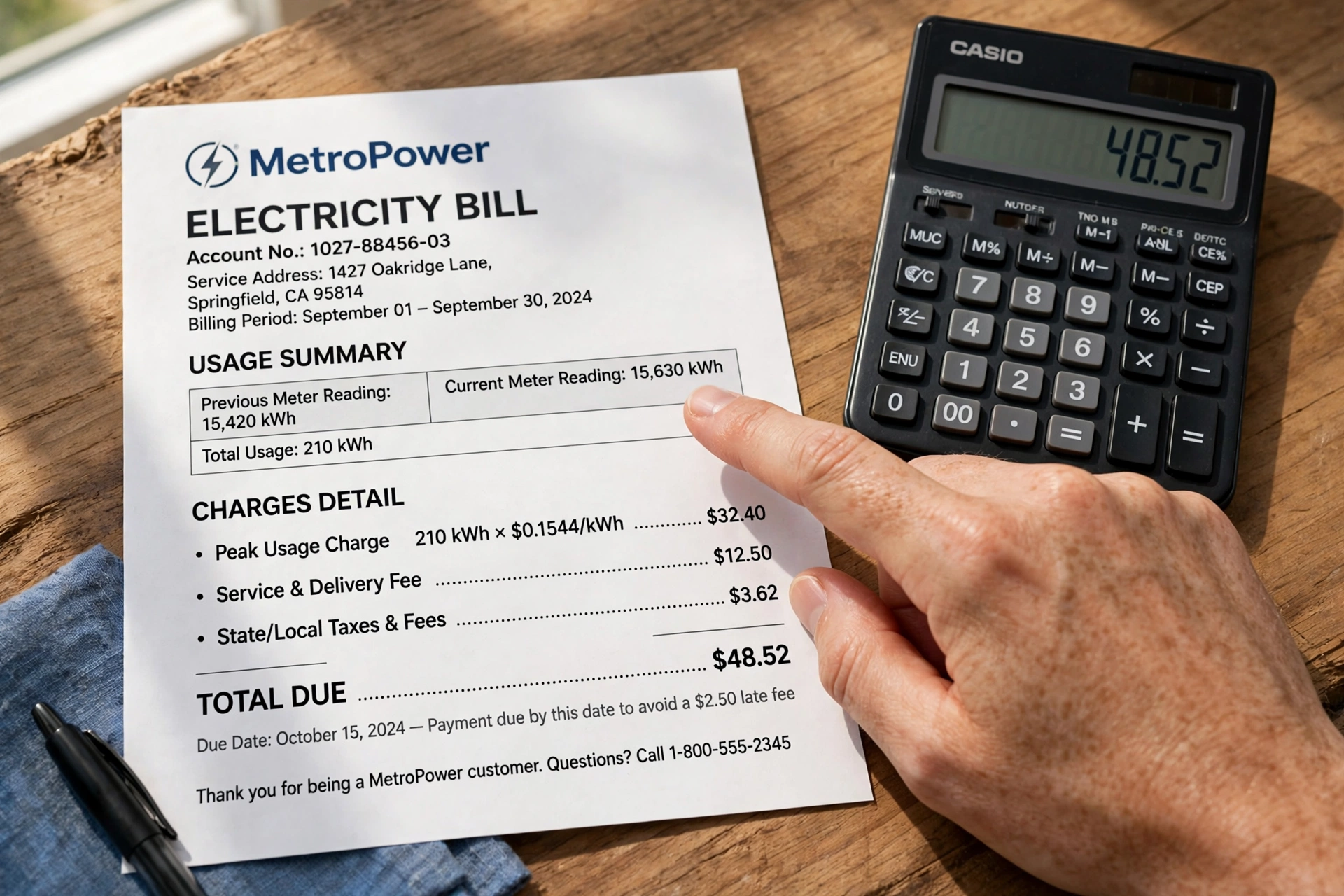
FPA amount = billed units × FPA rate per unit for that month
Here is a worked example — an illustration, not an official rate, because the real rate is set month by month:
| Example household | |
|---|---|
| Billed units | 250 units |
| Illustrative FPA rate | Rs 2.50 per unit |
| FPA amount | 250 × Rs 2.50 = Rs 625 |
Now change one thing: the same household uses 150 units the next month, at the same illustrative rate. The FPA falls to Rs 375 — fewer units for the same rate to multiply.
Check your own bill the same way. Multiply your units by the FPA rate printed on the bill: the result should roughly match the FPA total. A small rounding difference is normal. A large mismatch is worth querying — see the complaint steps below.
Why FPA Changes Every Month
If FPA were fixed, it would just be part of the tariff. It moves because the things behind it move:

- Fuel prices move. Furnace oil and imported gas are priced internationally, so a global price swing reaches your bill a little later.
- The generation mix changes. In a month when cheap hydel power covers more demand, the average fuel cost is lower. In a dry or high-demand month when expensive thermal plants run more, it is higher.
- There is a time lag. The adjustment on the bill you receive now reflects fuel costs from an earlier period, once NEPRA has determined the figure. That lag is why a month of expensive fuel can show up after prices in the news have already calmed down.
- Notifications can revise it. Later NEPRA or government notifications can adjust how an amount is applied, so the figure on an old bill is not a promise about the next one.
None of this makes a sudden jump pleasant, but it explains a common misreading: units steady, slab rate steady, yet the total higher than last month. In that case, FPA is the first line to check.
The October 2026 Note: Read Your Own Bill, Not a Number Online
Because FPA is set month by month, any website quoting a single “current FPA rate” for October 2026 should be treated with caution: the FPA line on your October 2026 bill is the one that applies to you.
Our MEPCO tariff rates guide follows the same rule deliberately: it explains the tariff structure rather than hard-coding figures that go stale. For FPA, your bill is the authority. Open it through the MEPCO bill check page or the homepage checker at mepcobillinfo.online, find the FPA line, and apply the multiplication check above.
FPA vs the Other Lines on Your Bill
Confusion usually comes from lumping everything together, so here is the short version:
- Energy charges are your units at your slab rate. If you crossed 200 units, the protected/unprotected change — explained in our protected vs unprotected guide — will move this line far more than FPA ever does.
- FPA is the fuel-cost correction described above: units × the month’s FPA rate.
- GST, electricity duty and TV fee are taxes and levies applied under their own rules; they are not fuel cost.
- Fixed charges apply separately from units consumed, so they stay even in a low-use month.
If your bill jumped sharply, work through the lines in that order — most sharp jumps are a slab change, an estimated reading, or heavy appliance use (see our guide to high MEPCO bills).
Can You Reduce FPA?
You cannot change the rate, but you can shrink the amount, because the amount is units multiplied by the rate. Everything that cuts units cuts FPA with it: fans switched off in empty rooms, an air conditioner on a timer rather than running all night, and a meter check mid-cycle so a heavy month is caught before the reading date, not after it. Our MEPCO bill calculator helps estimate the energy-charge side before the bill arrives.
What to Do If Your FPA Looks Wrong
Work through this in order, and keep a copy of each step:
- Recheck the maths. Multiply your billed units by the FPA rate on the bill. If it roughly matches the FPA total, the line is arithmetically correct even if the amount is unwelcome.
- Compare with the previous month. Note whether units, slab or FPA rate moved. A jump explained by units is a usage problem; a jump in the rate alone is a fuel-cost month. If the bill is marked EST (estimated), the units — and therefore the FPA — are estimates, and a corrected reading later can change both.
- Register a complaint on CCMS. Our guide to registering a MEPCO complaint on CCMS covers the evidence to attach, and our CCMS complaint tracking guide shows how to follow it. Attach a clear photo or PDF of the bill showing the FPA line.
- Escalate with the record. If CCMS stalls, take the same bill and complaint number to your subdivision office and ask for the SDO. A complaint with numbers attached is handled very differently from a general “my bill is high” visit.
Frequently Asked Questions
What is FPA in a MEPCO bill?
FPA is Fuel Price Adjustment: a per-unit charge correcting for the difference between the fuel cost assumed in the tariff and the actual cost of generation, as determined by NEPRA.
Is FPA the same every month?
No. The rate is set month by month and changes with fuel prices and the generation mix, so the same household can see a different FPA amount even with identical units.
Can FPA ever be negative?
Yes. If actual fuel costs come in below the assumed level, the adjustment can be a credit that reduces the bill instead of adding to it.
How is FPA calculated on my bill?
Multiply your billed units by the FPA rate per unit shown on the bill. That product is the FPA amount, subject to small rounding.
Does using fewer units reduce FPA?
Yes. Because FPA is charged per unit, fewer units mean a smaller FPA total at any given rate.
Who decides the FPA rate?
NEPRA determines the fuel price adjustment under its framework; MEPCO applies it through billing. The rate is not set by MEPCO alone.
خلاصہ
ایف پی اے (FPA) یعنی فیول پرائس ایڈجسٹمنٹ بجلی پیدا کرنے کے لیے استعمال ہونے والے ایندھن کی قیمت میں تبدیلی کا فرق ہے، جو نیپرا کے تعین کے مطابق مہینہ بہ مہینہ تبدیل ہوتا ہے۔ یہ آپ کے استعمال شدہ یونٹوں پر لگتا ہے، اس لیے یونٹ کم کرنے سے ایف پی اے کی رقم بھی کم ہو جاتی ہے۔ اکتوبر 2026 کے بل پر جو ایف پی اے درج ہے وہی آپ پر لاگو ہوتا ہے، اس لیے آن لائن کسی ایک نمبر پر بھروسہ کرنے کے بجائے اپنا بل چیک کریں، یونٹوں کو ریٹ سے ضرب دے کر حساب کی تصدیق کریں، اور اگر رقم غلط لگے تو CCMS پر شکایت درج کروائیں۔