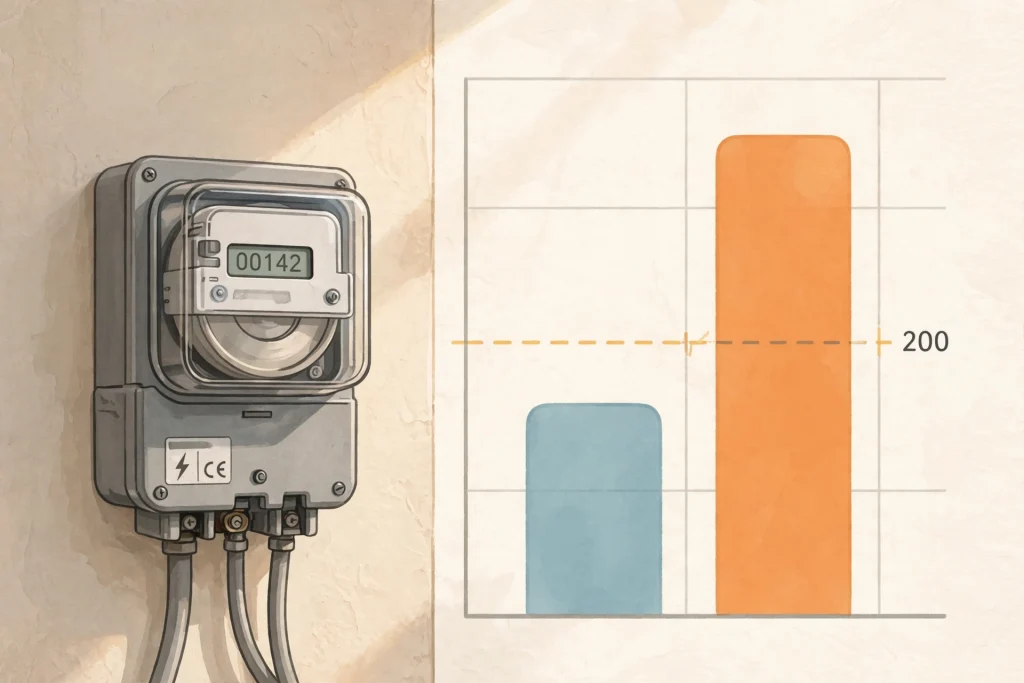
Two neighbours in the same street, with almost the same electricity use, can get bills that look nothing alike. More often than not the difference is not a faulty meter or a billing error — it is the category printed on the bill: protected or unprotected.
Short answer: A protected MEPCO consumer is a domestic (Tariff A-1) household that has used 200 units or less in recent billing months, and is billed at lower protected slab rates. Cross 200 units in a month and you move to the higher unprotected rates — under the rule as currently applied, that loss of status can last for the following six billing cycles, even if your later use drops back below 200 units.
What Protected and Unprotected Actually Mean
They are two rate bands inside the same domestic tariff, A-1, set under NEPRA’s tariff framework and applied by MEPCO through its billing system. Commercial shops, factories and tube-wells do not get this classification — it exists only for residential connections.
A protected household gets the subsidised, lower slab rates; an unprotected one pays the higher slabs for the same units. Published 2026 base energy rates put protected units at roughly Rs 10.54 for the first 100 units and Rs 13.01 for units 101–200, against roughly Rs 22.44 and Rs 28.91 when unprotected — more than double before FPA, taxes and fixed charges. These are base rates only, not your final bill, and they change with NEPRA notifications, so cross-check your latest bill.
The 200-Unit Rule, Plainly Stated
The rule itself is a single line, and that is exactly why it catches people out:
- Stay at or below 200 units in a billing month, and you keep protected status.
- Go to 201 units or more in a month, and you lose it.
- There is no buffer zone. 200 units is protected; 201 is not.
What makes the rule expensive is the second half. Under the formula as applied by MEPCO and other distribution companies, losing protected status in one month means higher unprotected rates for the following six billing cycles. Cutting back the next month does not restore the lower rates; they return only after six consecutive months at or below 200 units, when the billing system reclassifies the connection automatically. There is no form to speed that up.
One caution: in September 2026 the Power Division was reported to be reviewing this formula, proposing that the extra rate apply only in the crossing month. That is a proposal, not a notified change — until NEPRA or MEPCO confirms it officially, plan on the six-cycle rule.
195 Units vs 205 Units: The Worked Example
Take two domestic, single-phase households and compare only the energy charge, using the published 2026 base rates above and leaving out FPA, GST, duty, TV fee and fixed charges:
| 195 units (protected) | 205 units (unprotected) | |
|---|---|---|
| First 100 units | 100 × Rs 10.54 = Rs 1,054 | 100 × Rs 22.44 = Rs 2,244 |
| Next units | 95 × Rs 13.01 = Rs 1,236 | 100 × Rs 28.91 = Rs 2,891 |
| Remaining units | — | 5 × Rs 33.10 = Rs 166 |
| Energy charge (illustrative) | Rs 2,290 | Rs 5,301 |
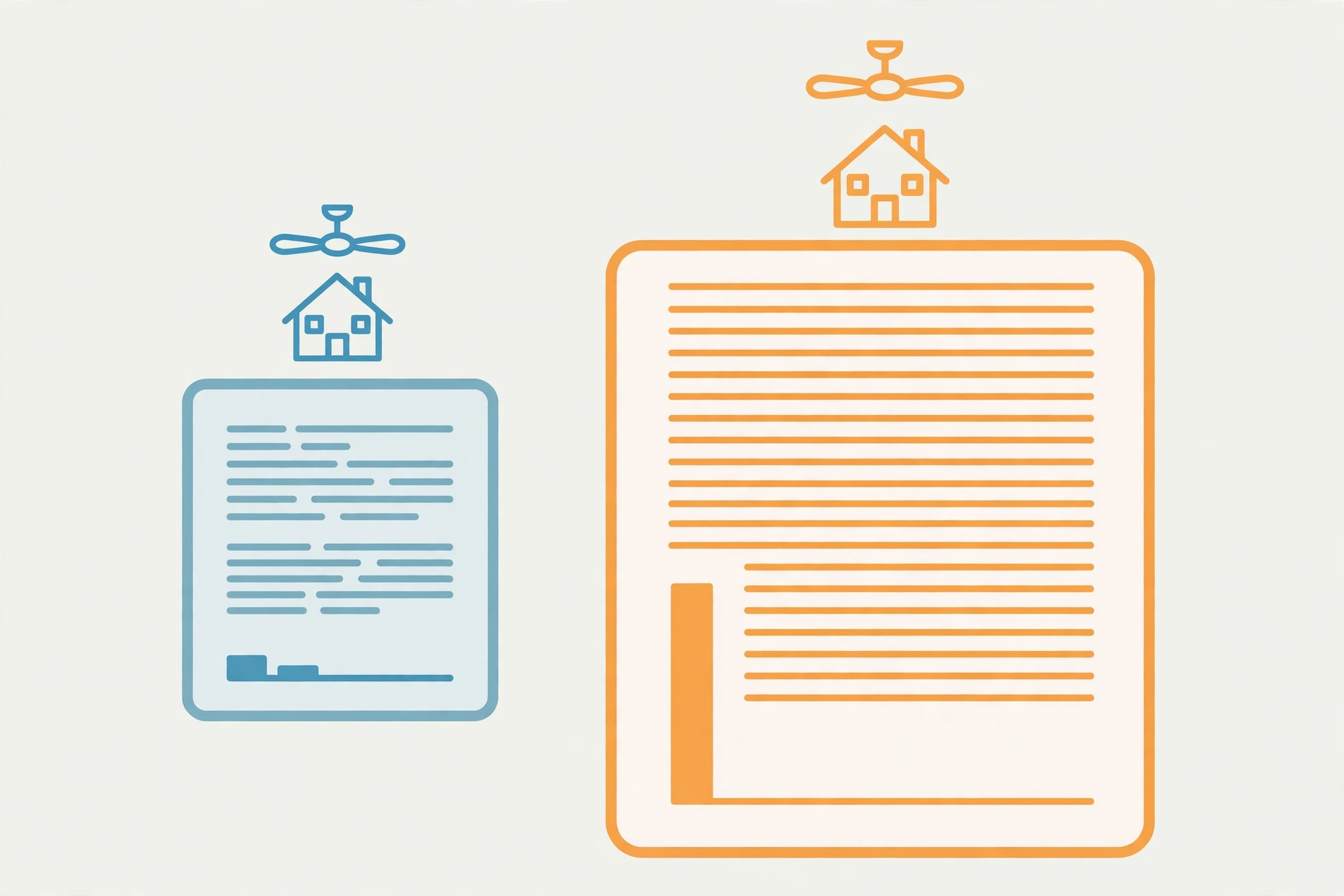
Ten extra units — a few extra fan-hours in a hot week, one geyser left on — more than double the energy charge here, from about Rs 2,290 to about Rs 5,301. And that higher band can follow the 205-unit household for six billing cycles even if it uses 150 units the next month. That is the real cost of the rule: not one expensive bill, but the six that can follow it. Check your own month early with our MEPCO bill calculator.
How to Check Whether You Are Protected
Your bill tells you directly: look for the tariff field, which reads something like “A-1 (Protected)” or “A-1 (Unprotected)”. You can view it through the MEPCO bill check page or the homepage checker at mepcobillinfo.online.
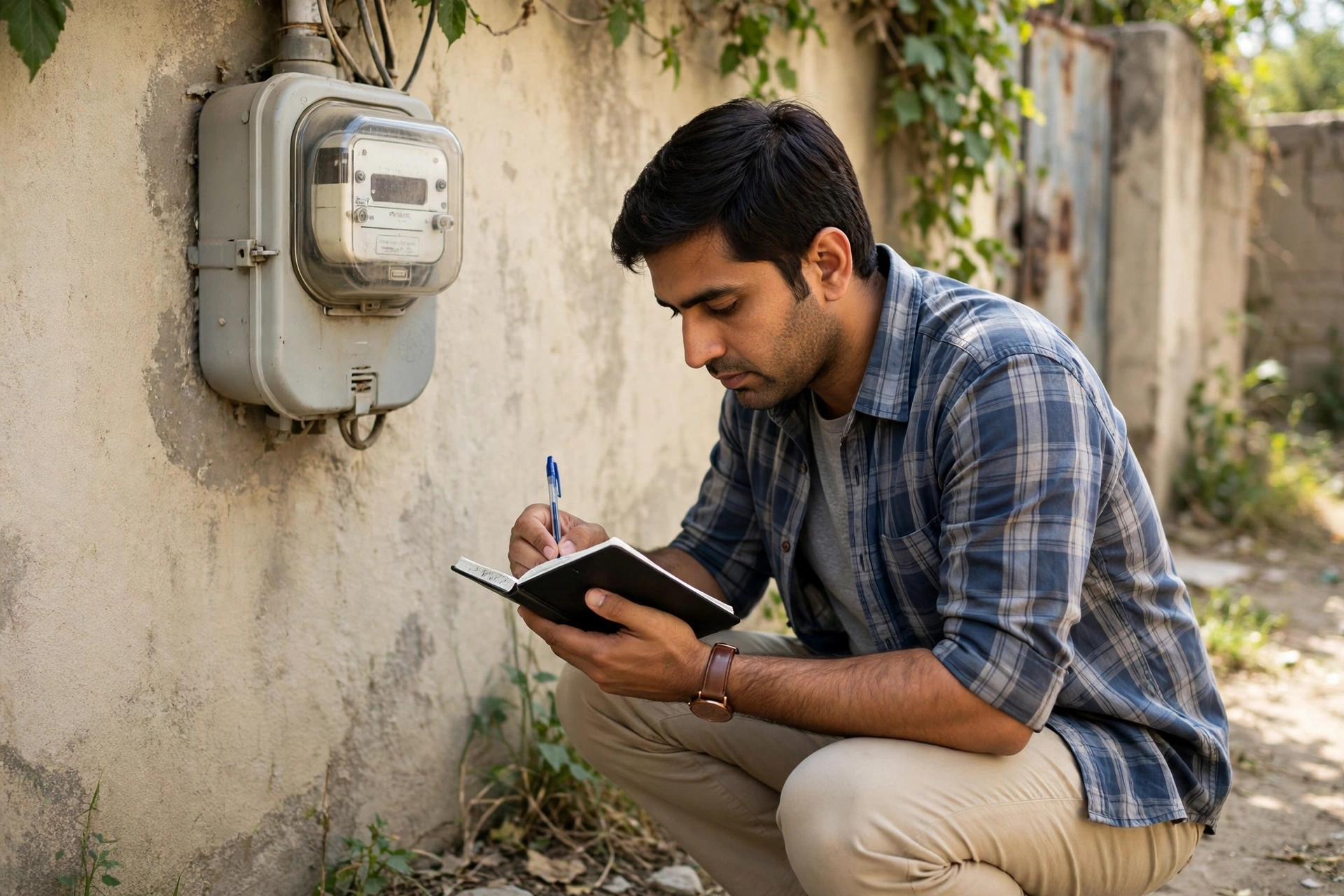
Two monthly checks help: read your physical meter mid-cycle and compare it with the previous bill’s reading — near 190 units with a week to go still leaves time to cut back — and lay your last six bills side by side, since one month over 200 explains a run of high bills and shows how many protected months remain.
How to Get Protected Status Back
There is no shortcut: bring usage back to 200 units or less, complete six consecutive months there, and the billing system reclassifies the connection automatically — no application or office visit is needed for the reclassification itself. Note your meter reading date, the fixed date MEPCO reads your meter each month, and plan heavy use around it. A household that checks its meter weekly is almost never surprised; one that never looks at it finds out from the bill.
Staying Under 200 Units Without Living in the Dark
Staying protected does not mean switching everything off — it means knowing what eats units:
- Fans and fridge first. In a South Punjab summer, fans running day and night are usually the biggest load after an air conditioner; switching off fans in empty rooms helps more than unplugging chargers.
- Air conditioners decide the month. One AC used casually through a hot month can alone push a household past 200 units, so a timer and a moderate temperature setting matter most.
- Geysers and heaters in winter. These are the winter equivalent of the summer AC — short, heavy loads that quietly accumulate.
- Old appliances. A decades-old fridge can draw far more than a modern one; replacing the worst appliance often pays for itself in protected-rate savings.
- Watch the last week. Most crossings happen in the final days of a cycle. A meter check three or four days before the reading date is the cheapest habit in this guide.
What If Your Category Is Wrong?
Sometimes the category does not match actual usage — six consecutive months under 200 units but the bill still shows unprotected, or an estimated (EST) reading pushed a month artificially over the line. That is a correctable billing error. Gather your last six bills, register a billing complaint through CCMS — our guide to registering a MEPCO complaint on CCMS walks through the evidence — and follow it with our CCMS complaint tracking guide. If it stalls, take the same record to your subdivision office and ask for the SDO. For the full slab structure, see our MEPCO tariff rates guide.
Frequently Asked Questions
How do I know if I am a protected or unprotected MEPCO consumer?
Check the tariff field on your bill — it shows A-1 (Protected) or A-1 (Unprotected).
Does crossing 200 units just once really affect six months of bills?
Under the rule as currently applied, yes — higher rates for the following six billing cycles, even if later usage drops below 200 units. A reported proposal to limit the extra rate to the crossing month has not been confirmed.
Can I apply to get protected status back faster?
No. It returns automatically after six consecutive months at or below 200 units. A wrongly applied category can be corrected through a CCMS billing complaint.
Does the 200-unit rule apply to commercial connections?
No. It applies only to domestic connections under Tariff A-1.
Is 200 units an average, or does one month over the line count?
One month over the line counts. The test is applied month by month, not as a six-month average.
What is the difference between protected and lifeline consumers?
Lifeline is the lowest part of the protected group, for use up to 50 and then up to 100 units at even lower rates.
خلاصہ
محفوظ (Protected) صارف وہ گھریلو کنکشن ہے جو 200 یونٹ یا اس سے کم بجلی استعمال کرتا ہے اور اسے کم نرخ ملتے ہیں، جبکہ 201 یونٹ سے زیادہ استعمال پر صارف غیر محفوظ (Unprotected) ہو جاتا ہے اور اسے تقریباً دگنے نرخ ادا کرنے پڑتے ہیں۔ ایک مہینے میں حد عبور کرنے سے اگلے چھ بلنگ سائیکل تک زیادہ نرخ لگ سکتے ہیں، اس لیے مہینے کے درمیان میٹر ریڈنگ چیک کرنا بہت ضروری ہے۔ محفوظ حیثیت واپس پانے کے لیے مسلسل چھ مہینے 200 یونٹ یا کم استعمال کرنا ہوتا ہے، جس کے بعد سسٹم خود بخود درجہ بندی بدل دیتا ہے۔ اپنا بل چیک کرنے اور یونٹ کا حساب لگانے کے لیے اسی ویب سائٹ کا بل چیکر اور کیلکولیٹر استعمال کریں، اور اگر درجہ بندی غلط لگی ہو تو CCMS پر شکایت درج کروائیں۔